The Shots You Trashed Are Worth More Than You Think
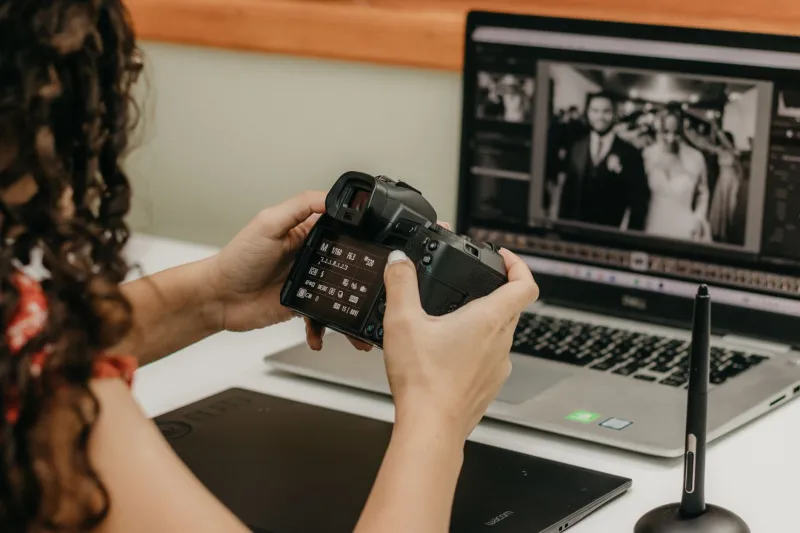
Here's something most photographers never consider: the frames you delete are doing invisible work for you — or against you — depending on whether you ever let a client see them.
Not the blurry ones. Not the accidental elbow shots. We're talking about the near-misses. The frames that were almost perfect. The ones where the light was right but the subject blinked, or the composition was chef's kiss but someone walked into the background. Those outtakes aren't just digital debris. They're evidence. And evidence builds trust faster than any portfolio page ever could.
Why Clients Don't Actually Buy Photos
Here's the thing most photographers miss when they're obsessing over their best work: clients aren't just buying a final image. They're buying confidence. They're buying the belief that you can handle the chaos of a real shoot — the unpredictable lighting, the nervous subject, the venue that looked completely different on the venue's Instagram.
A polished portfolio tells clients what you're capable of on your best day. Your outtakes tell them what you're capable of on a Tuesday afternoon when everything goes sideways.
There's real psychology behind this. Research in consumer behavior consistently shows that transparency increases perceived credibility. When someone shows you their process — including the parts that didn't work — your brain interprets that as honesty. And honesty, in a market where every photographer's website looks basically the same, is a serious differentiator.
The "Proof of Process" Shift
Some of the savviest photographers working today have started treating their outtakes as a deliberate part of their client communication strategy. They're not dumping every bad shot into a gallery and calling it "authentic." They're being intentional — selecting a handful of near-misses that actually demonstrate craft, effort, and problem-solving.
Take the concept of what some photographers are calling "proof of process" content. Instead of just sending a client their final gallery, they'll include a short note or even a quick video that walks through a few key moments from the shoot: "Here's the shot where we lost the light and I pivoted to backlighting — here's the frame before, and here's what we ended up with."
That kind of transparency does something remarkable. It shifts the client's mindset from "Did I get good photos?" to "Wow, look at what my photographer navigated to get me these photos." That's a completely different emotional experience — and it's the kind of experience people talk about to their friends.
Real Photographers, Real Results
Consider what's been happening in the wedding and portrait photography space over the last few years. Photographers who started sharing behind-the-scenes content — including outtakes — on platforms like Instagram and TikTok started seeing something unexpected: their inquiry rates went up, not down.
One portrait photographer based in Austin started posting side-by-side comparisons of rejected frames next to the final selects, with a quick caption explaining what she was chasing in each shot. Within three months, she reported that clients were coming to consultations already referencing those posts. They weren't asking "Can you shoot like this?" They were asking "How do you decide which moment to keep?" — a much deeper, more engaged conversation that consistently led to bookings.
A commercial photographer in Chicago took a slightly different approach. After every major shoot, he'd send clients a "making of" PDF — a simple, one-page document with three or four outtakes alongside the final selects, with brief notes on the decisions he made in the moment. His client retention rate over a two-year period improved significantly, and he credits a big part of that to clients feeling more connected to the work.
These aren't outliers. They're early adopters of a strategy that's going to become table stakes in a crowded market.
How to Do This Without Oversharing
There's a real risk of getting this wrong. Flooding a client with every mediocre frame from a shoot isn't transparency — it's noise. The goal is curation, not confession.
Here's a simple framework for using outtakes strategically:
Pick frames that show decision-making. The best outtakes for this purpose are ones where you can clearly articulate why you moved on from that frame. "The exposure was perfect but I wanted more energy in the subject's expression" tells a client something meaningful about your eye.
Keep it to three or four max. You're not building a case file. You're giving a client a window into your process. A short, curated look is compelling. A long one is exhausting.
Use it as a follow-up touchpoint. Rather than overwhelming clients during delivery, consider sending a short "behind the scenes" note a day or two after they've had time to enjoy their gallery. It lands differently when they're already happy — it becomes a bonus, not a disclaimer.
Lean into platforms built for speed. Tools that let you quickly compile and share content — whether that's a fast gallery link, a short video, or a simple PDF — make this whole strategy sustainable. If it takes you an hour to put together a three-frame outtake breakdown, you won't do it consistently. Build it into your delivery workflow so it's nearly automatic.
The Competitive Angle Nobody's Talking About
Here's what makes this strategy genuinely powerful from a business standpoint: almost nobody is doing it well yet. Most photographers are still competing on the same axis — portfolio quality, pricing, turnaround time. Those are real factors, but they're increasingly table stakes.
The photographers who are going to separate themselves in the next few years are the ones who figure out how to make clients feel something about the process, not just the product. Outtakes, used right, are one of the fastest ways to do that.
Your deleted shots aren't failures. They're proof that you were working — really working — to get the frame right. That's not a weakness to hide. That's a story worth telling.
And in a market where attention is scarce and trust is everything, the photographers who tell that story clearly and quickly are going to win.