Shooting Until 3 AM and Delivering by 9: Inside the Night Photography Speed Playbook
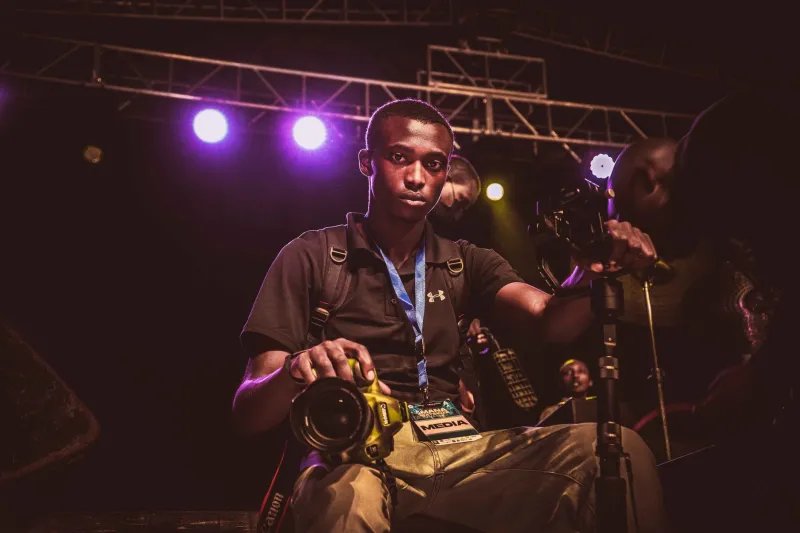
For most photographers, "fast turnaround" means getting a gallery to a client within 24 to 48 hours. For the photographers working concerts, nightclubs, and late-night sporting events, that benchmark is almost laughably generous. Their clients — venues, artists, PR agencies, sports teams — want galleries before the morning news cycle kicks in. Sometimes before the headliner's tour bus has even left the parking lot.
This is the 3 AM Problem. And it's forcing a completely different conversation about what speed actually means in professional photography.
The Unique Chaos of Night Shooting
Daytime commercial photographers deal with controlled environments. Even outdoor event photographers generally have predictable lighting conditions they can plan around. Night photographers operate in a completely different universe.
At a concert, lighting changes on a song-by-song basis. A performer bathed in blue wash one second is hit with a single amber spot the next. ISO values that would make a portrait photographer flinch — 6400, 12800, sometimes higher — become standard operating settings. Motion blur is a constant threat. And you're typically shooting in a pit with a dozen other photographers, working around obstacles, shooting up at awkward angles, all while the music is physically vibrating your chest.
The technical complexity of that environment doesn't disappear when you sit down to edit. It multiplies. Every image carries the fingerprints of difficult light. White balance is inconsistent across a single set. Noise reduction decisions that work on one frame destroy the next one. Batch editing — the cornerstone of fast turnaround workflows — becomes genuinely dangerous when your images have that much variation.
How the Fast-Delivery Night Shooters Are Actually Doing It
We talked to photographers working the concert and nightlife circuit across major US markets — New York, LA, Nashville, Chicago — to understand how they're consistently delivering next-morning galleries. The answers weren't what we expected.
They're not editing faster. They're editing smarter before the shoot even starts.
The photographers hitting consistent morning delivery windows have shifted a significant chunk of their editing work to the pre-shoot phase. Custom camera profiles built specifically for venue lighting. Preset libraries organized not by mood or style, but by lighting scenario — warm stage wash, blue/purple wash, white spotlight, mixed practical lighting. By the time they sit down at 3 AM, they're not figuring out how to fix an image. They're selecting from a system they've already built.
One Nashville-based concert photographer described his process this way: "I have about forty presets, but they're all named after lighting conditions, not looks. 'Warm wash, front-lit' does ninety percent of the work on maybe sixty percent of my frames from any given show. I'm not trying to make every photo look the same — I'm trying to get every photo to a workable baseline in one click."
The Triage Mindset
Night photographers who deliver fast have also fundamentally reframed what "delivery" means. They're not delivering a complete gallery of processed images. They're delivering a curated highlight set — typically 30 to 80 images — while the full archive gets processed on a secondary timeline.
This triage approach requires brutal clarity during the initial cull. Most experienced night shooters have developed what they call a "first pass" discipline: one viewing of each image, no going back, no second-guessing. Images get a yes or a no in real time. The goal of the first pass isn't to find perfect images — it's to find workable images fast.
From there, the yes pile gets the batch preset treatment. Images that don't respond well to the batch preset get a second look. Everything else waits for the secondary timeline.
"You have to be comfortable delivering 'good enough' at 8 AM and 'great' at 48 hours," said one sports photographer who covers late-night college basketball games across the Southeast. "Clients who need morning delivery know they're getting speed. Clients who want perfection know they're waiting."
The Hardware Nobody Talks About
Software workflow gets most of the attention in these conversations, but the night photography speed community has a lot to say about hardware — specifically, the computer setup required to process high-ISO RAW files at the pace these workflows demand.
High-ISO images carry significantly more data than clean, low-ISO files. Noise reduction algorithms — particularly AI-powered tools like Lightroom's Denoise or Topaz DeNoise — are computationally intensive. Running those tools on a batch of 500 concert images on an underpowered machine can add hours to a delivery timeline.
The photographers consistently hitting morning delivery windows are running machines with dedicated GPUs and fast NVMe storage. They're not using the same laptop they take to coffee shops for client meetings. The investment in processing power is treated as a direct investment in their ability to deliver — and therefore their ability to charge premium rates for that delivery speed.
Redefining the Speed Benchmark
What the night photography world is quietly revealing is that the standard "24-hour turnaround" benchmark was built around a very specific type of photography workflow. It assumes consistent lighting, manageable file complexity, and a shooting schedule that ends at a reasonable hour.
None of those assumptions hold at midnight in a concert pit.
The photographers thriving in this space haven't just gotten faster — they've gotten smarter about where speed lives in their process. Pre-shoot preparation. Triage-first culling. Tiered delivery timelines. Hardware that matches the computational demands of the work.
For everyone else, their playbook offers a useful lesson: the fastest workflow isn't always the one that moves quickest at the editing desk. Sometimes it's the one that does the most work before you ever pick up a camera.
Capture fast. But build the system that makes fast delivery possible long before the lights go down.