Trust the Flash: The Science Behind Why Your Gut Edits Beat Your Overthought Ones
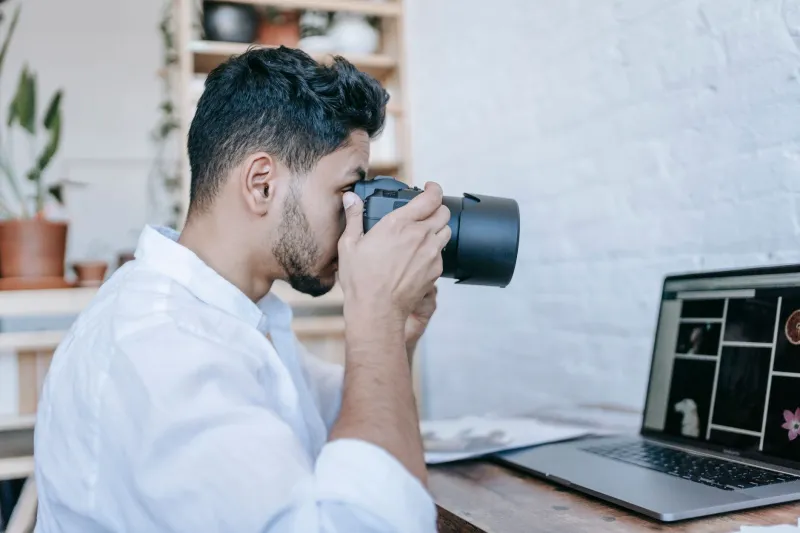
You've been there. You pull up a raw file, and within half a second you know — slight warm tone, pull the shadows, done. Then you talk yourself out of it. An hour later you've got seventeen adjustment layers, a completely different color grade, and somehow the image looks worse than when you started.
Sound familiar? You're not alone, and more importantly, you're not imagining it. There's a growing body of research that suggests your initial creative instinct is not just good — it's frequently the best call you're going to make all session.
What Your Brain Does in Three Seconds
Neuroscientists call it "thin-slicing" — the brain's ability to extract meaningful patterns from a very thin slice of experience. Psychologist Nalini Ambady coined the term in the 1990s, and her work showed that humans make surprisingly accurate judgments in two seconds or less across a huge range of domains, from personality assessments to aesthetic preferences.
For photographers, this matters enormously. When you first open an image, your visual cortex isn't just passively receiving data — it's running a rapid pattern-match against thousands of images you've seen and made before. Your brain is asking: does this feel right? And it gets an answer almost instantly.
Eye-tracking studies from the Nielsen Norman Group and similar UX research firms have shown that trained visual professionals — designers, photographers, art directors — fixate on the most compositionally critical areas of an image within 1.5 to 3 seconds. After that initial burst of attention, subsequent viewing tends to introduce analytical noise. You start noticing things that don't matter at the emotional level. You start thinking instead of feeling.
That's where edits go sideways.
The Overthink Spiral Is Real
Landscape photographer Dana Kellerman, based out of Denver, has been shooting and selling prints for over a decade. She describes what she calls the "spiral" with the kind of exhausted recognition that comes from having lived it too many times.
"I used to spend forty-five minutes on a single image," she says. "I'd bring the exposure up, then think it looked too bright, bring it back down, then wonder if the greens were too saturated, desaturate them, then decide the whole thing looked flat. By the time I was done I'd made like sixty adjustments and the photo looked like nothing."
She started timing herself after reading about rapid decision-making in a psychology book. "I gave myself three minutes per image, max. And the edits I made in those three minutes? My clients liked them better. My sales went up. I was genuinely shocked."
Dana's experience lines up with what researchers call "decision fatigue amplified by ambiguity." When there's no hard deadline on a decision — and editing a photo has no natural stopping point — the brain keeps searching for a better answer even when the first answer was already correct.
Why Longer Isn't Smarter
Here's the uncomfortable truth: the longer you stare at an image, the more your prefrontal cortex — the part of the brain associated with logic and analysis — starts overriding your visual intuition. You begin applying rules instead of responding to feelings. You ask yourself things like, "Is the temperature technically accurate?" instead of "Does this image move me?"
Photography, at its core, is an emotional medium. The images that stop people mid-scroll aren't technically perfect — they're emotionally undeniable. And emotional truth is something your gut processes faster than your analytical brain can even load up the question.
Mike Torrance, a wedding and portrait photographer out of Nashville, puts it bluntly: "My worst edits are always the ones I spent the most time on. My best work? I barely remember editing it. I just moved fast and trusted myself."
Mike now uses a self-imposed rule during his culling and editing sessions: if he can't make a decision on a photo in under two minutes, he moves on and comes back later with fresh eyes — but only once. "If I still can't decide on the second pass, I just go with the first instinct I wrote down. Nine times out of ten, that's the right call."
Building a Faster Editing Mindset
So how do you actually train yourself to trust the flash? A few practical approaches that working photographers swear by:
Set a hard timer. Give yourself 90 seconds per image during your first editing pass. Use it as a forcing function. You don't have to be done in 90 seconds, but you have to have made your primary decisions — exposure, color direction, crop.
Write down your first instinct before you touch anything. Sounds weird, but it works. Before you move a single slider, jot a quick note: "warm, moody, pull highlights." This anchors your gut response so you can return to it if you drift.
Use presets as a starting gun, not a finish line. A preset isn't a final answer — it's a way to immediately land in the emotional ballpark your gut was already pointing toward. From there, small adjustments. Not a full rebuild.
Stop comparing mid-edit. Toggling back and forth between your edit and the raw file more than two or three times is a sign you've lost the thread. Trust that first comparison and commit.
Speed and Confidence Are the Same Skill
Here's the reframe that might actually change how you work: editing speed isn't about cutting corners. It's about having enough confidence in your creative vision that you don't need external validation from endless tweaking.
The photographers who edit fast aren't being lazy. They've developed a clear aesthetic point of view, and they trust it. They've shot enough, edited enough, and gotten enough feedback that their gut has been trained by thousands of reps. Their three-second instinct isn't random — it's compressed expertise.
At PhotoRush, we talk a lot about moving fast without sacrificing quality. This is exactly what that looks like in practice. Not rushing for the sake of it — but recognizing that your best creative decisions often happen in the first few seconds, and the job after that is mostly just getting out of your own way.
Next time you open a raw file and feel that immediate pull toward a certain direction, try something different: go with it. Set a timer. Make your calls. Ship the image.
Your gut's been right this whole time. You just kept talking it out of it.