Your Algorithm Clock Starts the Moment You Hit Save
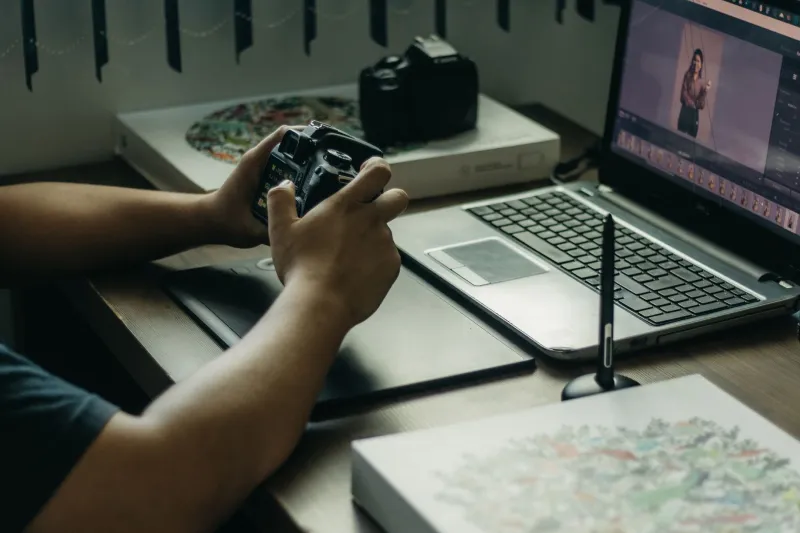
Here's a scenario that plays out thousands of times a day across the US photography community: You shoot a killer set on Saturday afternoon. The light was right, the subjects were locked in, and you've got at least a dozen frames that could genuinely stop a scroll. So you do what feels responsible — you take your time. You tweak the whites, second-guess the crop, recolor the shadows, and by Tuesday morning you finally post.
And almost nobody sees it.
This isn't bad luck. It's math.
The 72-Hour Window Nobody Talks About
Social media platforms — Instagram, TikTok, Facebook, even LinkedIn for the B2B-minded shooter — all operate on engagement velocity models. In plain English: the faster your post collects likes, comments, shares, and saves after going live, the more aggressively the algorithm pushes it to new audiences. Wait too long to post, and you're not just late to the party. You're showing up after the venue has been swept and locked.
Analysis from multiple creator economy researchers consistently points to the same rough window: content posted within hours of creation — or tied closely to a real-time event — generates significantly higher early engagement rates than content posted days later. Some estimates put the performance gap as high as 40-60% in reach, depending on the platform and account size. The first 72 hours after a shoot represent peak audience relevance. After that, the moment has passed, and the algorithm knows it even if you don't.
For photographers, this is a structural problem. The traditional workflow — shoot, cull, deep edit, export, caption, schedule, post — was designed for a world where timing didn't matter. That world is gone.
Perfectionism Is a Reach Killer
Let's be honest about what's actually happening during those two or three days of delay. Most photographers aren't spending that time doing technically critical work. They're agonizing over decisions that their audience will never notice — a 5-point exposure bump, a slightly warmer tone, a crop that shifts the subject two pixels to the left.
Meanwhile, the photographer who shot a similar session, ran a fast cull, applied a solid preset, and posted a strong hero image within the same evening? They've already captured the attention of the algorithm, built early momentum, and potentially booked two follow-up inquiries from people who saw the post while it was actively being promoted.
Perfectionism in the algorithm age isn't a quality standard. It's a competitive disadvantage.
Creators who've experimented with this directly tell a consistent story. One portrait photographer based in Austin ran an informal test over three months: she posted half her sessions within six hours of the shoot and held the other half for her usual 48-to-72-hour editing window. The fast-posted content averaged nearly double the profile visits and generated measurably more direct message inquiries. The slow-posted content, despite being more heavily edited, performed like it was uploaded into a void.
Speed Isn't Sloppiness — It's Strategy
The pushback here is predictable: "I have standards. I'm not going to rush my work just to feed an algorithm." Fair enough. But there's a false binary buried in that response.
Posting fast doesn't mean posting garbage. It means having a workflow that's built for speed without sacrificing the quality markers your clients actually care about. Skin tones that are clean. Exposure that reads well on mobile. A composition that holds up at thumbnail size. Those things can be achieved in minutes with the right tools and the right habits.
What you're cutting isn't quality — it's the compulsive over-refinement that adds hours to your process and zero dollars to your invoice.
Platforms like PhotoRush exist precisely because this tension between quality and speed is real, and it's solvable. Rapid processing tools, one-click sharing workflows, and mobile-first delivery options aren't shortcuts for lazy photographers. They're infrastructure for smart ones who understand that speed is now part of the creative product.
What Early Engagement Actually Buys You
Let's zoom out and talk about what's really at stake beyond likes and reach numbers.
When your post gets traction in its first few hours, a few things happen simultaneously. The platform pushes it to more of your existing followers, which deepens your relationship with your current audience. It then tests it against non-followers in your niche, which is how organic growth actually happens. And if you're a working photographer, that early visibility window is when potential clients are most likely to see your work in a contextually relevant moment — right after the kind of event they might be planning themselves.
A wedding photographer who posts a ceremony highlight the same evening it was shot is reaching couples who are actively in the booking mindset, on a Saturday night, probably scrolling while they talk about their own plans. That's not a coincidence. That's timing as a business strategy.
Delay that post until Tuesday and you're reaching the same people at their desks, distracted, in a completely different headspace. The content is identical. The context is not.
Rethink the Finish Line
The traditional idea of a "finished" photo is worth questioning. Finished for what purpose? If finished means technically pristine but algorithmically invisible, that's not actually a win.
A growing number of working photographers are redefining their finish line as "good enough to perform" rather than "perfect enough to print." That doesn't mean lowering the bar — it means placing the bar where it actually matters. Strong images, fast processing, immediate delivery. That's the new standard.
Some are even experimenting with posting a quick hero frame or a two-image teaser within hours of a shoot, then following up with a fuller gallery post a day or two later. The initial post captures the algorithm window. The follow-up deepens engagement with an audience that's already primed. It's a two-hit strategy that plays the platform's own rules against it.
The Clock Is Already Running
If you shot something this week and it's still sitting in Lightroom while you decide whether the shadows need another pass — the algorithm has already moved on. The audience that would have seen it at peak relevance is scrolling past someone else's work right now.
That's not meant to stress you out. It's meant to reframe the decision. Every shoot has a shelf life. The question isn't whether to post fast — it's whether you have the workflow to make fast posting feel effortless.
Build that workflow, and speed stops being a compromise. It becomes your edge.