Ditch the Shot List: Why the Best Photos Happen When You Stop Planning and Start Reacting
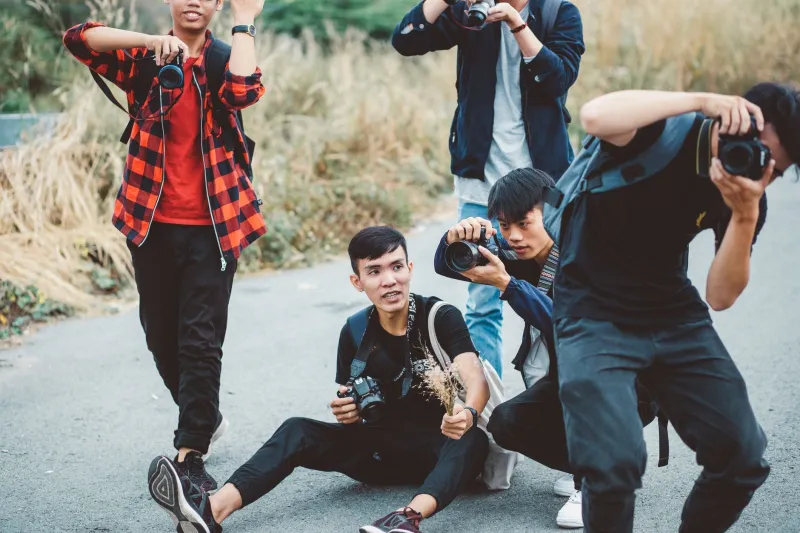
Every photography workshop teaches the same gospel: plan your shoot, build your shot list, scout the location, confirm your lighting setup, brief your subjects. And look, that framework exists for good reason. Preparation reduces costly mistakes on paid gigs.
But here's what the workshops don't tell you: some of the most magnetic images — the ones that rack up engagement, land in publications, and get clients calling back — happen in the gaps between the planned shots. They happen when something unexpected occurs and a photographer's instincts kick in faster than their brain can second-guess.
So what's actually going on when spontaneous shooting outperforms the perfectly choreographed session? And can you build a sustainable creative practice around being reactive rather than rigidly scripted?
The Problem With Perfect Plans
Shot lists are a form of creative insurance. They're designed to guarantee you don't leave a job empty-handed. And for high-stakes commercial work, that guarantee is worth something real.
But insurance, by definition, is built around avoiding loss — not maximizing gain. When you're executing a shot list, you're in fulfillment mode. You're checking boxes. And that mental posture, focused on completion rather than discovery, can close off your peripheral vision to the moments happening just outside the frame you planned.
Sarah Tran, a lifestyle photographer in Los Angeles who splits her time between brand work and personal editorial projects, describes it this way: "When I'm working from a rigid script, I'm managing logistics. When I let the session breathe, I'm actually looking. Those are completely different brain states."
Tran started documenting which images from her shoots actually got used by clients and which ones performed best on her own channels. The pattern surprised her: the unscripted frames — the candid laugh between poses, the accidental silhouette when the light shifted — consistently outperformed the meticulously planned hero shots.
What the Engagement Data Suggests
It's not just anecdotal. Photographers and content creators who've analyzed their own performance data tend to find that images with an element of spontaneity — an unguarded expression, an unexpected environmental detail, a moment that looks genuinely unrepeatable — generate stronger engagement than technically perfect but posed compositions.
This tracks with broader research on authenticity in visual content. Audiences, especially younger demographics that dominate platforms like Instagram and TikTok, have developed finely tuned detectors for staged content. An image that feels caught rather than constructed triggers a different response — it feels like evidence of a real moment rather than a performance of one.
For photographers building social followings or pitching editorial work, that distinction matters enormously.
Staying Sharp Enough to Catch the Magic
Here's the catch: spontaneous shooting isn't the same as showing up unprepared and hoping for the best. The photographers who consistently capture great reactive images aren't lucky. They're ready.
The difference is what kind of preparation they're doing.
Prepare your instincts, not your shot list. Before a shoot, instead of scripting specific frames, spend time thinking about the emotional territory you want to cover. What does a genuine moment of joy look like for this subject? What environmental details tell the story of this location? You're not planning shots — you're priming your eye.
Reduce your gear friction. Spontaneous shooting dies when you're fumbling with settings. Photographers who excel at reactive work tend to shoot with simplified setups — fewer lenses, familiar gear, exposure modes that let them move fast. You can't catch a fleeting expression when you're adjusting your diopter.
Build in unstructured time. If you're scheduling a two-hour session, protect at least 20–30 minutes that have no agenda whatsoever. Tell your subject you're just going to hang out for a bit. Walk around. Let things happen. This is often where the session's best image is born.
Shoot through the awkward middle. The first 15 minutes of any session are usually stiff. Subjects are self-conscious, the rhythm hasn't developed yet. Reactive shooting requires getting past that phase, which means not rushing to nail your hero shots too early.
The Business Case for Being Reactive
Beyond the creative argument, there's a practical reason to build spontaneous shooting into your professional toolkit: it's faster.
A meticulously choreographed shoot with elaborate setups takes time to execute. When you're chasing moments rather than manufacturing them, you can cover more emotional ground in less time. For photographers operating in a market that rewards speed — quick turnarounds, fast delivery, same-day proofing — the ability to work efficiently without sacrificing creative depth is a genuine competitive edge.
Ryan Callahan, a New York-based editorial photographer, has made reactive shooting a centerpiece of his pitch to magazine clients. "I tell them I'm not going to over-direct their subject," he says. "I'm going to create conditions for something real to happen and then be ready when it does. That's a faster process and it produces images that don't look like every other editorial shoot."
His booking rate among repeat clients — editors who've worked with more traditionally structured photographers — speaks for itself.
Finding the Balance
None of this means you should walk into a paid job with zero preparation. The shot list isn't the enemy. Rigidity is.
The most effective photographers treat their plans as a starting point rather than a script. They do the prep work, they establish the structure, and then they hold it all loosely — ready to abandon the plan entirely the moment something more interesting presents itself.
In a world where audiences can spot a manufactured moment from a mile away, the ability to catch something real is genuinely rare. And rare things, as any photographer knows, are worth more.
Stop choreographing. Start watching. The shot you didn't plan is waiting.