Shoot Less, Create More: The Case for the 15-Minute Creative Session
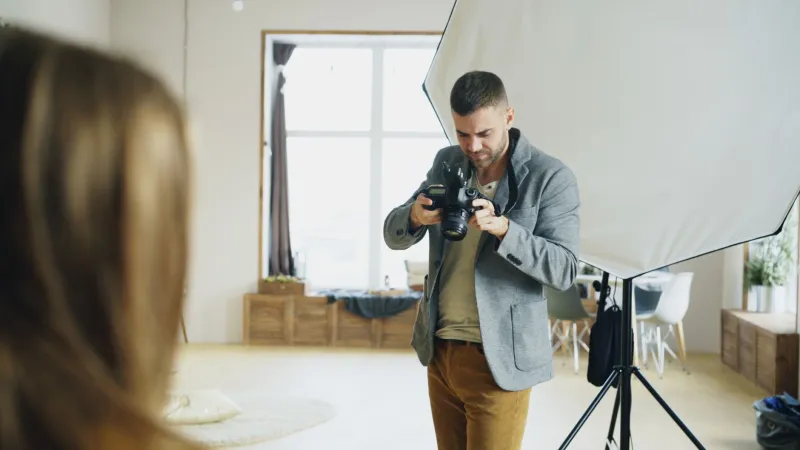
Here's a question worth sitting with: what if the reason your last shoot felt flat wasn't because you didn't have enough time, but because you had too much of it?
It sounds backwards. More time should mean more options, more experimentation, more room to find the shot. But ask any photographer who's spent three hours in a location only to pick the frame they grabbed in the first 20 minutes — and suddenly the logic starts to crack.
A growing wave of photographers across the US are deliberately capping their shoots at 15 minutes. Not because they're lazy. Not because they're overbooked. Because they've figured out that constraint, real hard-edged creative constraint, is one of the most powerful tools in the game.
Why Your Brain Works Better Under Pressure
There's actual science behind this. Psychologists call it the "scarcity mindset" — when resources are limited, the brain sharpens its focus and prioritizes ruthlessly. In a creative context, that translates to faster decision-making, less second-guessing, and a stronger instinct for what actually works.
When you have three hours to shoot, your brain knows it. It relaxes. It wanders. It tells you that the good stuff is probably coming later, so why commit now? You end up with a card full of hedge bets and very few bold swings.
Cut that window to 15 minutes, though? Everything changes. Suddenly every frame matters. You stop fiddling with angles you're not sure about and start moving toward the ones that feel right. You're not exploring anymore — you're executing.
Laura Chen, a portrait photographer based out of Austin, Texas, started experimenting with timed shoots after a client session that dragged on for four hours and still felt inconclusive. "I had thousands of frames and nothing I was excited about," she says. "The next week I did a 15-minute personal project shoot just to decompress, and I got my favorite image of the year. That was the wake-up call."
The Framework: How to Actually Pull This Off
Jumping into a timed shoot without structure is just chaos with a countdown. The photographers making this work aren't just hitting a timer and hoping for the best — they're building a lightweight framework around the constraint.
Pre-shoot intention setting. Before the clock starts, spend five minutes deciding on one primary concept or mood. Not three. One. This isn't the time for a mood board deep dive — it's a gut-check exercise. What's the single visual idea you're chasing?
Location lock-in. Pick your spot before you start the timer. Wandering eats time and kills momentum. The 15 minutes are for shooting, not scouting.
Two-angle rule. Give yourself permission to work two angles on a subject, max. If neither is landing, move on. This sounds brutal, but it trains your eye to evaluate faster and commit harder.
No chimping. Reviewing shots mid-session is the creativity killer. Trust your instincts during the shoot, and review after the timer goes off. This one's hard for a lot of photographers at first, but it's also where a lot of the magic hides.
Marcus Reid, a commercial shooter from Chicago who's built a loyal social following around his "15-minute series," puts it plainly: "Chimping is just doubt with a screen. You're not evaluating — you're second-guessing. Kill it."
What This Does for Your Content Strategy
Here's where it gets interesting for photographers who are also thinking about their online presence — which, in 2024, is basically everyone.
Shorter, more intentional shoots tend to produce more cohesive sets of images. When you're working fast and focused, you're not drifting stylistically. The frames have a consistency that longer, more meandering sessions often lack. That cohesion translates directly into stronger social posts, more compelling reels, and portfolio work that actually has a point of view.
And there's a shareability factor that's hard to ignore. The "15-minute shoot" concept is inherently story-worthy. Audiences on Instagram and TikTok respond to process content, especially when there's a constraint or challenge baked in. Photographers who document these sessions — even just with a quick behind-the-scenes clip — are tapping into a content format that performs well because it's honest and a little bit dramatic.
You shot that in 15 minutes? That's a hook.
The Authenticity Angle
There's something else that happens in a compressed shoot that's harder to quantify but impossible to ignore: you stop performing and start reacting.
When you have unlimited time, there's a temptation to overthink your way into a "safe" version of your vision. You hedge. You cover your bases. You shoot the version you think people will like alongside the version you actually want to make. It's a creativity-diluting habit, and most photographers don't even realize they're doing it.
Take away the time buffer, and that safety-net behavior collapses. You go with your gut because there's no alternative. And gut shots — the ones made on instinct rather than calculation — are almost always the ones that feel alive.
Jordan Patel, a wedding and lifestyle photographer based in Atlanta, started doing weekly 15-minute personal shoots as a creative reset between client jobs. "Client work is collaborative, which I love, but it can blur your own voice over time," she explains. "The timed shoots are where I stay sharp. They remind me what I actually see, not just what I'm hired to see."
Start Small, Start Today
You don't need a new camera, a new location, or a new concept to try this. You need a timer and a willingness to get uncomfortable.
Set it for 15 minutes. Pick one idea. Lock in a spot. Shoot without reviewing. Then sit with what you made.
Chances are, you'll surprise yourself. And if you're documenting the process for your audience, you might just find that the constraint itself becomes part of your brand story — a signal that you shoot with intention, not just volume.
In a world where more is always being pitched as better, there's something genuinely refreshing about a photographer who's figured out that less, done fast and done right, is actually the whole point.