Airplane Mode on Purpose: Why the Most Productive Photographers Are Choosing to Disappear During Their Best Hours
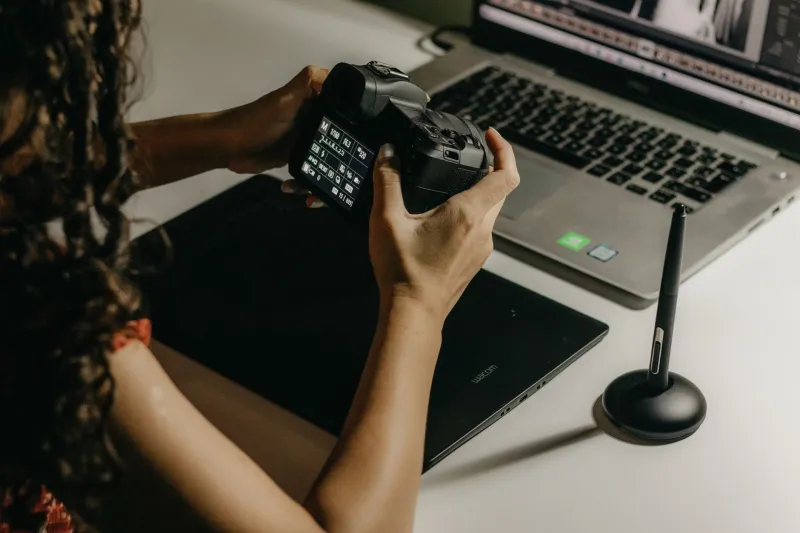
It sounds counterintuitive. You're running a business. Clients need access to you. Leads go cold if you don't respond fast. So why are some of the most successful photographers in the country deliberately turning off their phones for hours at a time — and why is it making them more money, not less?
The answer has everything to do with how creative output actually works, and very little to do with the hustle-culture myth that availability equals professionalism.
The Interruption Tax Nobody Talks About
Every time your phone buzzes during an editing session, you pay a cognitive tax. Research from the University of California, Irvine — widely cited in productivity circles — found that it takes an average of 23 minutes to fully return to a task after an interruption. Not a few seconds. Twenty-three minutes.
For a photographer in the middle of a complex edit, that's not just annoying. It's economically damaging. If you're interrupted three times during a two-hour session, you may have functionally lost more than an hour of real productive output — even if you felt like you were working the whole time.
"The hidden cost of always-on availability is massive, and almost nobody is measuring it," says Dr. Rachel Okonkwo, a behavioral psychologist based in New York who has worked with creative entrepreneurs on performance optimization. "People feel like they're being responsive and professional. What they're actually doing is fragmenting their cognitive resources to the point where they can't do their best work."
What Deep Work Actually Looks Like for Photographers
Cal Newport's concept of deep work — focused, uninterrupted effort on cognitively demanding tasks — has become something of a productivity religion in knowledge-work circles. Among photographers, it's starting to take hold in a very practical way.
The principle is simple: creative output is not linear. An hour of fully focused editing is not equivalent to two hours of distracted editing. The quality and quantity of work produced in a genuine deep work block dramatically outpaces what gets done in a fragmented session of the same total duration.
For photographers, this translates directly. A two-hour uninterrupted editing session — phone off, notifications killed, email closed — might yield a complete gallery that would otherwise take four or five hours of distracted work spread across a day.
That's not just a time win. It's a revenue win. More galleries shipped per week means more income, more referrals, and a faster feedback loop with clients.
The Creators Going Dark on Purpose
We talked to photographers across the country who have built deliberate offline windows into their daily schedules. The specifics vary, but the structure is consistent: identify your peak creative hours, block them off, and protect them aggressively.
Alex Moreno, a portrait and commercial photographer based in Los Angeles, goes offline from 7 AM to noon every weekday. No email, no Instagram, no texts. His phone sits face-down in a drawer.
"I used to think I needed to be available from the moment I woke up," he says. "I was responding to DMs at 6:30 in the morning and then wondering why I felt burned out by 10. Now I do my best editing in the morning when my brain is fresh, and I handle all communication in the afternoon. My output has probably tripled."
Sarah Whitfield, a family and lifestyle photographer in Atlanta, takes a slightly different approach. She uses a focus app — she prefers Freedom — to block social media and messaging platforms during editing blocks. She also has an auto-reply set on her email that tells clients she checks messages twice daily, at noon and 5 PM.
"I was terrified that clients would be upset," Sarah admits. "The opposite happened. People actually respected it. A few even said it made them feel like they were working with someone serious."
The Anxiety of Being Unreachable
Here's the real obstacle, and it's worth naming directly: most photographers aren't staying online because it's actually necessary. They're staying online because going offline feels scary.
There's a specific flavor of anxiety that comes with being unreachable — a low-grade fear that a lead is slipping away, that a client is frustrated, that something is going wrong that you could have caught if you'd just checked your phone. That anxiety is real, but the data doesn't support it.
Dr. Okonkwo calls this "responsiveness anxiety," and she sees it constantly in creative professionals. "The fear is almost always disproportionate to the actual risk," she says. "Most client communication is not time-critical. A four-hour response window is completely professional in almost every context. But the anxiety makes it feel like an emergency."
The fix, she suggests, is starting small. Block one hour. See what happens. Then extend it. The evidence — both from research and from the photographers who've made this shift — is that almost nothing bad happens when you go offline for a few hours. And a great deal of good work gets done.
The Practical Setup
If you want to build a deliberate offline window into your workflow, here's a starting framework used by several photographers we spoke with:
Identify your peak hours. Most people have a two-to-four-hour window of peak cognitive performance. For many, it's in the morning. Figure out when yours is.
Set an auto-reply. A simple, warm email auto-reply that tells clients you check messages at specific times of day sets expectations and removes the pressure to respond instantly.
Use a focus app. Freedom, Cold Turkey, and Focus@Will are all popular options among creators. Set a session, let the app do the blocking, and remove the willpower requirement.
Protect the window. Don't schedule calls, don't book consultations, don't run errands during your deep work block. Treat it like a meeting you can't cancel.
The Paradox of Going Faster by Slowing Down
At PhotoRush, we're all about speed — capturing fast, sharing faster. But real speed isn't about being constantly available or constantly moving. It's about doing your best work in the least amount of time, and delivering it without hesitation.
The photographers going offline during their best hours aren't slowing down. They're removing the friction that was holding their speed back all along. That's not counterproductive. That's the whole game.